
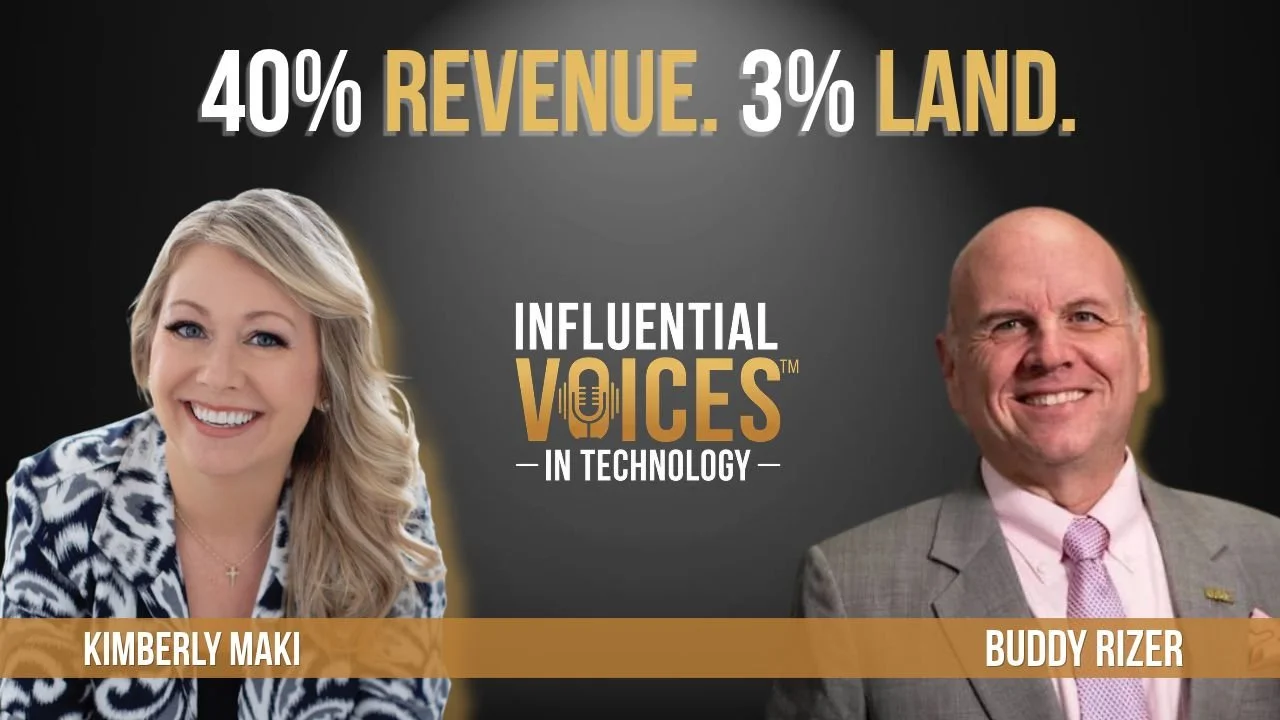
With Buddy Rizer, Economic Developer, Economist, Board Member, Strategic Advisor and Kimberly Maki, Host of Influential Voices in Technology™

EPISODE 9 • INTERVIEW
ABOUT THIS EPISODE
Forty percent of a county’s tax revenue from just three percent of its land. That’s the remarkable economic impact of data centers in Loudoun County, Virginia. Twenty years ago, the county relied heavily on residential property taxes and struggled to keep pace with growing demands for public services. Today, it's home to one of the world's largest concentrations of data centers.
Kimberly Maki talks with Buddy Rizer, Executive Director of Economic Development for Loudoun County, Virginia, whom The Wall Street Journal called “the godfather of data centers.” Together, they explore what Loudoun County got right, what it learned along the way, and why Buddy believes the industry must do more to earn the trust of the communities it serves.
YOU’LL HEAR THEM DISCUSS:
How Loudoun went from a 19% to a 51% commercial tax base and used the money to build 22 schools, 15 fire stations, and thousands of affordable homes, all while cutting residents’ property tax rate
Why Buddy says the real question isn’t whether to have data centers but where and how, and the siting mistakes Loudoun learned from
The reclaimed water line now serving about a third of the county’s data centers, and why he sees water use as an engineering choice
What Virginia has done to stop big power users from pushing costs onto household electric bills
His blunt take on the industry: a Super Bowl ad isn’t the same as showing up and talking to your neighbors
The three questions he’d ask before any council says yes to an AI data center developer
What communities should be negotiating for beyond tax revenue, from extra ambulances to workforce training and school partnerships.
MEET OUR GUEST
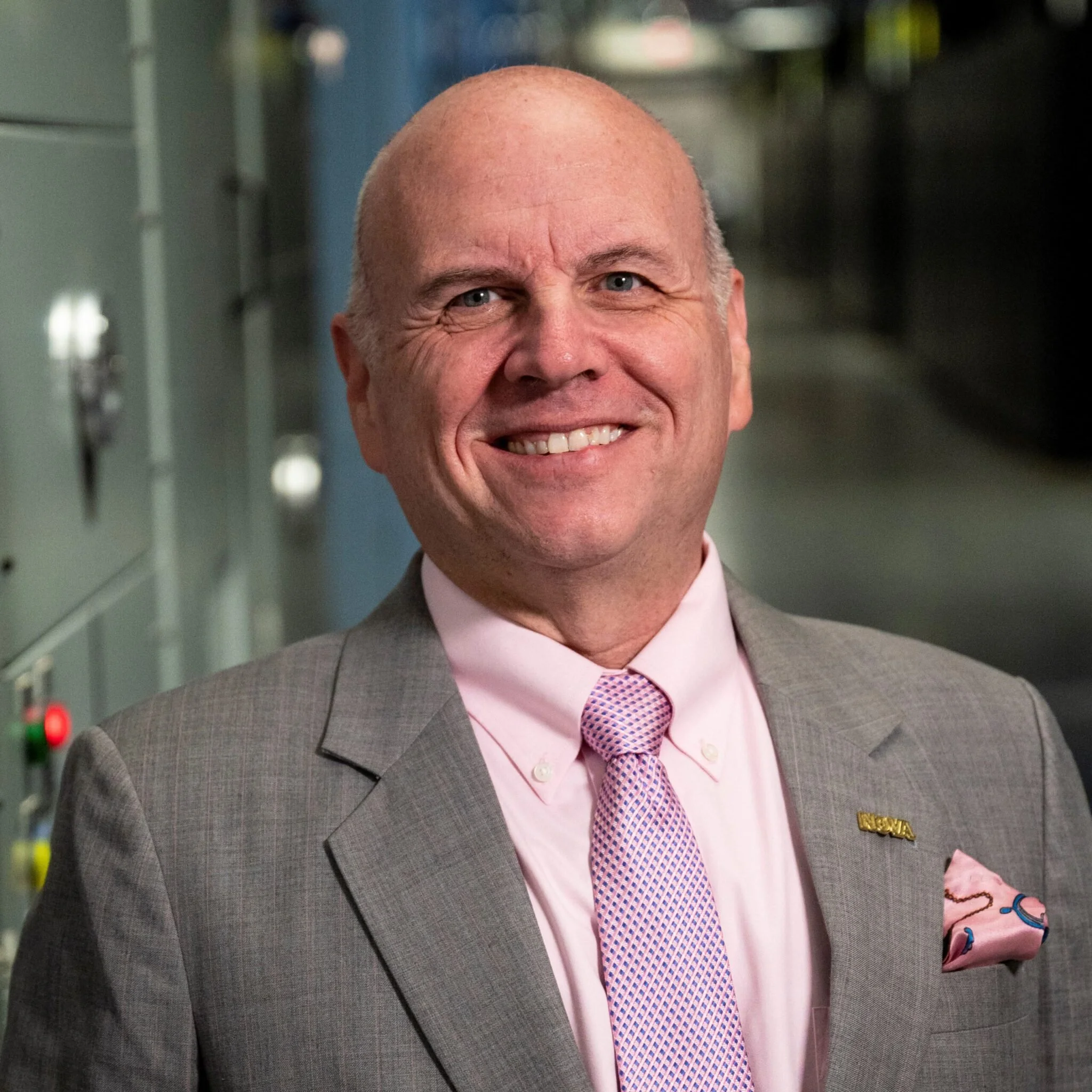
Buddy Rizer, Economic Developer, Economist, Board Member, Strategic Advisor and “The Godfather of Data Centers“
Buddy Rizer is the Executive Director of Economic Development for Loudoun County, Virginia, where he has helped attract more than $70 billion in commercial investment and 65,000 new jobs. Since joining the county in 2007, he has played a key role in building “Data Center Alley” into the largest concentration of data centers in the world. His work has helped position Loudoun County as a global leader in technology and economic development.
A recognized leader in the industry, Rizer has been named one of Virginia’s 50 Most Influential People multiple times and has earned numerous regional and national honors. He serves on several boards, including the Northern Virginia Community College Board of Trustees, and is a Certified Economic Developer with a master’s degree in business and economics from Longwood University.
-
Kimberly Maki
Welcome to Influential Voices in Technology. I'm Kimberly Maki. The Wall Street Journal called my next guest the godfather of data centers.
Buddy Rizer, Executive Director of Economic Development for Loudoun County, Virginia, helped transform the region into one of the world's largest and most importantly, most influential data centre markets. And as artificial intelligence accelerates demand for infrastructure, communities everywhere are facing some big decisions. What makes a data centre a good investment for a community and how can communities make sure they're getting it right?
Today, we're exploring those questions with someone who's been at the centre of it all. Buddy, welcome. I'm delighted to have you here.
Buddy Rizer
Thank you for having me. It's a real pleasure.
Kimberly Maki
Okay, so we'll get started here. Buddy, having served as a Regional Economic Development Board member myself back in the day, I've come to believe that people who work in economic development often have a very personal why behind what they do. After nearly 20 years in Loudoun County, what's yours?
Buddy Rizer
Well, I think for me, you know, we talk a lot about possible. I mean, our website is loudounpossible.com and Loudoun Possible is kind of our slogan. For me, it's always been about what is possible in a community and I remember going way back to when I was a kid and I would spend my summers with my maternal grandparents and my grandfather was on the railroad.
He worked on the railroad in Cumberland, Maryland, which was a big railroad town back then and I would remember him coming home from work and he would be just dirty and tired and exhausted and sore and, you know, he was always willing to still, you know, go to the baseball game with me or have a catch or those things. But, you know, as I got older, I started saying to him, you know, why don't you find something that's easier? Why don't you find something that doesn't wear you out so much?
And I remember him saying that, you know, there's no real other opportunity for me here. This is the skill I have. This is the job I have and, you know, my family depends on me.
And, you know, I started thinking about opportunity and what does that mean? And I can't tell you it was then I wanted to become an economic developer, but, you know, since then, I've always tried to find out what that opportunity is and that's really what economic development's about. It's giving your community more opportunity, having them reach for what is possible and to me, that's why I have been so dedicated to this profession and it's why I feel really good about what we've been able to accomplish here in Loudoun because we've created so much opportunity for our residents that, you know, it's great to see.
Kimberly Maki
So was there a moment along the journey when, because you started in economic development, you probably didn't think data centre first. Was there a moment that you remember when you actually imagined and envisioned that when you saw what Loudoun County could become, even if others couldn't see it yet?
Buddy Rizer
Yeah, I think early on, I didn't know data centres and didn't know much about it, you know, and for me, data centres became the tool through which we were able to grow our commercial tax base. When I started here, we were 81% dependent on residential real estate for our tax base and we were growing at 15,000 people a month and just, we weren't able to keep up. We weren't able to do the schools and keep up with the fire and keep up with the rescue and do all the things that a quality community does.
Then the housing bubble burst and we lost a significant part of our revenues so we were cutting back on services. We were raising taxes. We were laying people off.
At that point, we didn't even as a community have fooled a kindergarten. So, you know, we felt this pressure to grow the commercial tax base and we had all these assets. We had AOL here.
They brought with them a great workforce. We have the internet exchange. We had all this fibre in the ground and we had some remnants, some buildings that were built for the dot-com bubble and were empty.
And so that to me was the first thing. It's like, let's fill those buildings. Let's figure out how to fill those buildings.
And that was really when I started to figure out data centres. And so, you know, I kind of learned what that was going to be about, took the show on the road, went to Seattle and then met with Amazon and Microsoft and went to San Francisco and met with then Facebook and Google and just started trying to understand what it would take to put somebody in Loudoun County using that great infrastructure we had built and be able to leverage that for the future of the economy.
Kimberly Maki
That's amazing. So what numbers best tell the story of that transformation?
Buddy Rizer
Well, I think that there are several. First of all, we went from 19% commercial tax base to 51% commercial. We get about 40% of all of our tax revenues from data centres.
But I think what, you know, and then this year that'll be about $1.2 billion. But I think the numbers that really tell that story are the impact. You know, the fact that we've been able to build 22 schools and 15 fire stations and six libraries and more than 1,000 acres of parks and recreation and created an affordable housing programme.
We've been able to, since 2017, put about $117 million into about 2,200 new affordable units. And we did all of that at the same time we were able to reduce the property tax rate on our residents by $0.48 on the dollar. So we went from having low services and high taxes to amazing services and low taxes.
And we did that in under 20 years.
Kimberly Maki
Wow, those numbers are impressive. What has it meant then for, I mean, I can infer from those numbers what it's meant for the people who live there, but can you give me an example of something that the county has been able to do that otherwise might not have been possible? I mean, I do understand the education, the emergency services, but something that you know for sure would never have been possible without this.
Buddy Rizer
Yeah, I think that there's a lot of things, but I think the one that I'm most proud of is the infrastructure we've been able to build to support our citizens. You know, the social safety nets, the mental and physical health. I mean, we're very fortunate.
You know, we have, we sit here today as with the highest life expectancy in the country and, you know, number six on the list of 1,000 or 3,000 counties as healthiest communities. You know, we've been able to build the infrastructure and everything that's necessary for people to be happy and healthy and successful. You know, growing, you know, the number of jobs here by, you know, 70,000 people, you know, 70,000 new jobs here.
Those kinds of things are life-changing for people, you know, and to be able to live and work in your own community and be able to make a great living and enjoy the great amenities that we've been able to create, all of those things are, I think, really powerful results of economic development. You know, it's what we've been able to help create. I mean, obviously, in government, we don't necessarily create everything.
We create the environment where private investment can help grow, and that's really what we've been able to do here.
Kimberly Maki
So I don't know if you actually said the amount of land that is being used for data centres in your county. What was the amount?
Buddy Rizer
Well, we get 40% of our revenue from 3% of our land.
Kimberly Maki
3%. So, wow, land use is one of the things that many communities are up in arms about right now. So that's actually a very significant amount of revenue for 3% of the land.
So how did Loudoun County arrive at that relatively small land footprint? I mean, I'm assuming there's deliberate planning involved, but are there unique lessons that another community might learn from what you've been able to accomplish?
Buddy Rizer
Yeah, and I think land use is an important thing because after a community decides if they want a data centre, the next important question is where. You know, we identified what we call Data Centre Alley, and it was, you know, it was like 3.8 square miles. It was not a big area, but we had the fibre loop and we had the reclaimed water line and we had the buildings in the commercial area.
But we have made some mistakes along the way where we put data centres in areas where we probably should not have, you know, too close to homes or, you know, too close to sensitive areas or those kinds of things. So I think where means a lot. And then it has to be how, right?
I mean, how do you do it? What are the guardrails that you put up? And so much of it is about understanding your infrastructure and understanding what can work in your community because, you know, whatever development you want and every kind of development has impacts, whether it's commercial or residential, you know, how do you mitigate those impacts?
How do you make sure that you have the resources necessary for what you're trying to do? And how do you make sure that that plan fits into your overall strategy for how you want to build your community?
Kimberly Maki
So I'm guessing a lot of communities probably reach out to Loudoun County about these things because you're so successful at what you've done and you've actually, you've met with challenges, you know, risks, things that have happened over the years. Can you talk about the standards that you've learned or the requirements? And are you pulling them together in another way that maybe other counties can learn from you?
Or is that taking it too far?
Buddy Rizer
No, we get two and three requests a week from communities that want to come visit. And we try to be very generous with our time and our experience because, you know, when I think back 20 years ago, you know, we were asking the same questions then that the communities are asking now. And we didn't really have anyone to look at.
You know, we were kind of trying to figure it out as we went. So we want to share our best experiences. But you used an important word and that was evolution because this is an evolution.
You know, the industry as we know it today is only about 20 years old. So you wouldn't want to judge the aviation industry or the automobile industry after 20 years. It's a constant growth and a constant kind of sense of improvement.
And so the buildings that we're seeing today are much more efficient and do a much better job and are built to use less water and built to make sure that they're as efficient as possible. And along the way, our county has also made those leaps. You know, we learned things along the way of where you site them and how you site them and how important that is.
We've learned about how you can use the buildings and setbacks and buffering to prevent noise and how we wanted to have more buffers between homes and commercial uses. And we've learned, you know, design standards are important, especially on road frontages. You know, we've learned all those things along the way and we have, as a community, adjusted along the way.
You know, we sit here today, we're closer to the end of our evolution of data centres than we are at the beginning by a lot, but we're still learning, we're still evolving, and we're talking about things like, you know, what does onsite generation really look like if that's something that we need? What does it really look like to have these things clustered and be able to utilise common backups? Or, you know, we're really thinking through that.
We think there's an obligation to continue to be on the front end of all those things. So, you know, it's exciting to continue to live and to learn as the industry itself continues to live and learn.
Kimberly Maki
One of the things that caught my attention now that you're talking about the infrastructure and all the different decisions and the new technologies was Loudoun County's use of reclaimed water to support data centre development. I mean, it's just not something I've heard a lot about, even though I did live in a community that did use reclaimed water for all the, you know, common areas and parks, which I thought was incredibly useful. How did that come about?
And also, who paid for that infrastructure?
Buddy Rizer
Well, the reclaimed water line was built here as a conservation thing, you know, for the use of water, non-potable water in all of the golf courses or the roadways and those kinds of things. But it was a loop that was around our commercial area. So, the data centres have been able to leverage that and about a third of our data centres today are on the reclaimed water line.
And all of our water and sewer is paid for, you know, through availability fees. And those availability fees are based on how much water you use. So, if you're a big water user, you're going to pay more to support the infrastructure than maybe a home would, things like that.
And we're currently talking about expanding our reclaimed water line because we've had so much, we're fully subscribed to the reclaimed water line. But I think water is a very important topic because you hear a lot about water. But I've always felt that water is an engineering choice.
It's not a mandate. And each community should identify, you know, how their water supply fits into what they're trying to do. For us, I mean, we have the most data centres anywhere in the world.
And our data centres use less than 10% of our entire potable water. Right? I mean, it's not insignificant, but it's not a big deal for us.
But it's important in communities where water is more of an issue that they should make sure they're using closed loop systems or those kinds of things. It's something the industry is finally catching up to. They understand the importance of it.
And, you know, you're not seeing any of the new builds really using the same amount of water that maybe an older building would in some places.
Kimberly Maki
So that brings me to another infrastructure concern. I recently participated in a forum where residents, it was a closed door forum, where residents expressed concerns about higher electricity bills following data centre development. So what safeguards can communities put in place to protect residents?
And specifically, because you are in Virginia, how is Virginia addressing concerns that the costs of serving large electricity users, particularly data centres, could be passed along to other customers? So what's happening in that realm?
Buddy Rizer
Yeah, in Virginia, there's no evidence that the data centres have caused residential bills to go up. That said, you know, obviously we want to make sure we're protecting our residential rate payers. Through the latest rate case, Dominion and the SEC came up with a rate plan that ensures that large users are paying for the infrastructure they need.
That there is a take or pay. If you don't, if you reserve a certain amount of energy and they build the infrastructure, even if you don't take it, you have to pay for it. There are new rate classes that we've added that have a different rate to protect those.
You know, so and other states have done this too. I mean, we've seen this in Utah. We've seen this in Florida.
We've seen this in other places. And really it's something that every state should look at. But I think the, you know, there's two things that are going on right now, right?
We all know that electric prices, electric bills have gone up. You know, so we know fuel costs are through the roof. We know that for 20 years, the electricity use in the United States was flat.
And so we weren't investing in the grid. But now with the electrification of our homes and our cars and the need for the way we're using information, you know, it's not the data centres alone. You know, it's us using our phones that causes the need for data centres, that causes the need for all that.
So the residential bills have gone up, but not because of the infrastructure that are required for data centres, at least in Virginia. Now I can't speak to every community, you know, but I will tell you in Virginia, I think our General Assembly, our governors have done a good job to make sure that our rate payers are protected.
Kimberly Maki
Thank you. Yeah, that's a much deeper explanation and very valuable, I think, for our listeners. So, you know, I'm looking at this not only as evolution, but transformation, and you've been at the centre of this transformation for years.
What do you understand about the benefits that you wish more people could see? And the second part of that question is, what does the industry need to do differently to earn public trust?
Buddy Rizer
Yeah, and I'll get to the industry, because I have pretty strong opinions about it. Okay. But, you know, I think I want to start with the fact that, you know, it's not a matter of if data centres, it's where and how.
And that's what's important to know. Now, every community probably shouldn't have or would want to have data centres, and I think that's okay. Every community should define their own opportunity.
That said, there isn't another asset class that drives revenue for communities like data centres do. I mean, it's multiples of any other asset class. So, I think that's important to note.
But I think that we also have to understand that data centres are just infrastructure that enables all the other things we do, that we can't take a picture and store it on our phone or buy something on Amazon or talk on this podcast or, you know, watch Netflix or anything. I mean, how many examples are there, right, the way that we're using information now? So, in order to continue that growth and to feed that trillions of dollars of economy that's based on the Internet, we have to have the infrastructure.
And so, we need to do that, but we should do that in a very responsible way. We have to, I mean, we started doing this in Loudoun County for the community. Like, we brought data centres here for the community.
The narrative has kind of flipped to this is something that we're doing to communities. It can't be that. It has to be something we're doing for communities and something we're doing with communities.
And I think that largely the industry has been, in many ways, their own worst enemy. They haven't communicated well. You know, there are big buildings with big fences and seemingly no people when there really are a lot of people and they're your neighbours.
But it's just the messaging hasn't been there. I think the industry was slow to react to what has become a national conversation. And I'm not sure that they're still as engaged as they should be.
I do not believe that you can put a 30-second Super Bowl ad about how good data centres are and think you've done your job. You know, it's about the conversation. It's about the education.
It's about the engagement in your communities because it's going to take that engagement to help people understand both the opportunities and the things that they have to think about. You know, and that is all going to be incredibly important. But you can't do that unless you have engagement and ensuring that engagement has been tough.
Before a data centre comes into a community, they should meet with the local government. They should understand what's important in that community. They should come ready to answer the questions.
They should not just go in and put a deposit on a big piece of land that happens to have power lines on it and say, okay, we're going to put a data centre there and then start working with the community. That's the wrong way to do it. You know, you have to start with community first and understand what that community development, community benefit agreement is going to be.
And so if you can start there, that conversation becomes a lot easier. And that's something we really have to do better at.
Kimberly Maki
I agree. So let's imagine I'm sitting on a city council or an economic development board and a developer does approach and it's about building a major AI data centre. What would be the first three questions we should ask before anything else?
Buddy Rizer
Well, first of all, I need to understand our infrastructure. So I'm going to start with asking ourselves the question, what is the infrastructure that we have that would support this? Do we have the right power?
Is there fibre? What is our water situation? You know, do we have an industrial area where this fits?
So before anything else, I would want to understand that. Then I would want to understand from the developer, from the end user, you know, what does engagement in our community look like to you? Because these are the needs we have, right?
We don't have enough ambulances or we need a new water system or we need, what do we need? Because every community is different. Every community has different opportunities and different needs.
So determine what those are and then how you're going to engage around that. And then it's what is the long-term? You know, we understand that you're going to build the building, but what is your long-term engagement in our community?
And how can you help us with workforce development? How can you help us become the community that we want to be? And I think Loudoun is a great example of that.
You know, the industry has helped us become the community we are. And so it is really about having that engagement and that conversation. You know, transparency should be the standard and communication is key.
You can't do that without having these real open conversations. Right now it's hard because no one wants to have a reasonable conversation right now. And I understand that.
I mean, we see that even here in Loudoun County. But the reality is that you have to do that balance of opportunity and the challenges that come with any sort of development.
Kimberly Maki
So just a couple more questions here. One that you just kind of raised, you know, in thinking about this, because I was thinking when I was hearing your answers earlier, I was really going to the money and the money that could be used for, you know, fire, education, you know, safety, these kinds of things, jobs. But something you just said kind of opened up my thinking a little bit.
What should a community potentially be negotiating for beyond immediate tax revenue?
Buddy Rizer
Yeah, and I think that there are a lot of things, right? But it has to start with what do you need in your community. For us, it was affordable housing.
You know, we were able to build most of the resources, but we really needed help around affordable housing to make sure that the workforce had a place to stay. So the industry has engaged in that conversation, and we have some big announcements coming up that we're excited about. But, you know, in other communities, you know, I've visited communities where they have, like, two ambulances for the entire county.
So if those two ambulances are out on calls, you know, you don't want to be the third resident, right? So, you know, these are things that you have to have those conversations early and often, right? And then I think the other thing that you want to continue to have is what does the future look like?
I mean, how do you engage in our K-12 system? How do you help partner in our community colleges? How do you have workforce training programmes so that our residents not only have the benefit of the tax revenue, but also have that opportunity for improvement in careers?
And really, the industry can make all that possible, and we've seen it happen. We have probably the best case study in the world right here. But it has to be intentional, and it has to be collaborative, and we have to really make sure we're engaged in having those conversations.
Kimberly Maki
So I'm going to go back to what I said earlier about, like, just actually, you know, researching you and talking with you today. Again, you've been at the epicentre of this transformation. So with AI changing the scale and speed of development, what's the biggest thing communities need to prepare for next?
Buddy Rizer
I think that those communities that are ahead of this are the ones that are going to be successful. The communities that are proactively looking to identify the right locations, that are ahead of understanding what their infrastructures are, putting the right kind of zoning and protections in place, those are the ones that will be successful. The ones that will struggle are those that are going to be reactive.
You know, somebody shows up, and they bought a big parcel of land, and now you're trying to figure it out. A lot of these places that are getting data centres now, they don't have that same level of experience. And, you know, you might not have a full-time economic developer, or you might have a small building in development or planning and zoning team.
So it's leveraging what resources you have to understand not only how to deal with today, but then how do you go into the future.
You also have to understand the financials of it, because every community is different, every state is different in how they tax, but you want to understand if you get this revenue, when you get this revenue, how are you going to maximise that and how are you going to make sure that that's being used and that you're also able to project into the future how this is going to roll out. And I think that's really, really important. So I think a community has to do several things to prepare for this.
They have to understand their taxing structure and they have to understand what their needs are, they have to understand how they mitigate the challenges and how they protect the residents and the way of life of their communities.
Kimberly Maki
Yeah, I see it as when I'm listening to you, it's not really just about like the construction and infrastructure and the growth, it's actually the services that are enabled for these communities well into the future that are actually the foundations are being built now with edge infrastructure. I mean, really, you kind of mentioned it, you touched on it a little bit, the automotive industry, even manufacturing, things that will, you know, it's not just AI data centres is what they enable. So, you know, I think about like when all the building, you know, kind of comes to a halt or we've built, you know, what we can in these communities.
How do we know that we've built something that truly benefits the community in a lasting way?
Buddy Rizer
Exactly. And, you know, I come back to where we started. It's all about possibility.
It's all about opportunity.
Kimberly Maki
Have I missed anything that you think is very important that you want people to know?
Buddy Rizer
No, I just think that we as communities, we need to have honest, fact-based conversations. And we can't let the conversation be fear-based or political-based. You know, we need to make sure that we're getting the facts, that we're understanding, that we're communicating, that we're trusting each other, giving each other the benefit of the doubt.
So you could have these conversations in a way that do benefit everyone in the community.
Kimberly Maki
Well, Buddy, thank you. I appreciate your perspective and your willingness to share what other communities can learn from Loudoun County's experience. It's very gracious for you to be able to take this time to do that.
And what I hope our audience takes away is that these decisions are about much more than buildings, technology, and investment, although all of that is very important. They're about the future of our communities and the opportunities we create for the people who live in them. And that's what Influential Voices and Technology is all about.
I'm Kimberly Maki. Thank you for joining us. You can find out more conversations on YouTube, Apple Podcasts, and Spotify and at influentialvoices.com.
Until next time, thank you for joining me and Buddy Rizer on Influential Voices and Technology, where technology and infrastructure empower human potential.
Watch on YouTube • Listen on Apple Podcasts • Listen on Spotify
Related Episodes

Enjoyed this episode?
Explore more conversations about technology, infrastructure, energy and opportunity.